
El Cajon City Directory Shelves
El Cajon material is spread across regional San Diego collections rather than one city-only run. The documented shelf at San Diego Public Library Central Library’s California Collection covers city directories from 1886 through 2021. A book labeled San Diego can still have an El Cajon section, while the suburban books are often the better address bridge for East County. Start with the year, publisher, and place of access before treating a result as a local match.
| Collection | Years | Where Held | Access |
|---|---|---|---|
| San Diego city directories | 1886-2021 | SDPL Central, California Collection | In person; confirm volume in catalog |
| San Diego Yesterday directories | 1887-1925 | SDPL-linked digital collection | Online scans |
| City Archives directories | 1874 and many 1926-1960 volumes | San Diego Digital Archives | Free PDF reference scans |
| Suburban city directories | 1955, 1956, 1957, 1958, 1959, 1960 | City Archives and SDPL | Digital and library access |
| Great Register | 1888-1892 | SDPL California Collection | In person; historical voter evidence |
| San Diego Union | 1868 onward | SDPL California Collection | Hard copy or microfilm |
| Sanborn maps | 1867-1970 database | SDPL map and eLibrary collections | Library access; verify El Cajon sheets |
The SDPL California Collection is the best documented starting shelf for the El Cajon collection search because it joins books with the Great Register, the Union run, photographs, and maps. Digital scans remain useful, but the San Diego Digital Archives states that its archive is reference-only after July 1, 2025. Missing years should therefore be reported as a coverage question, not filled with a guessed volume.
The California Collection reference view shows the regional shelf that supports an El Cajon collection search across books, newspapers, maps, and named historical rolls.
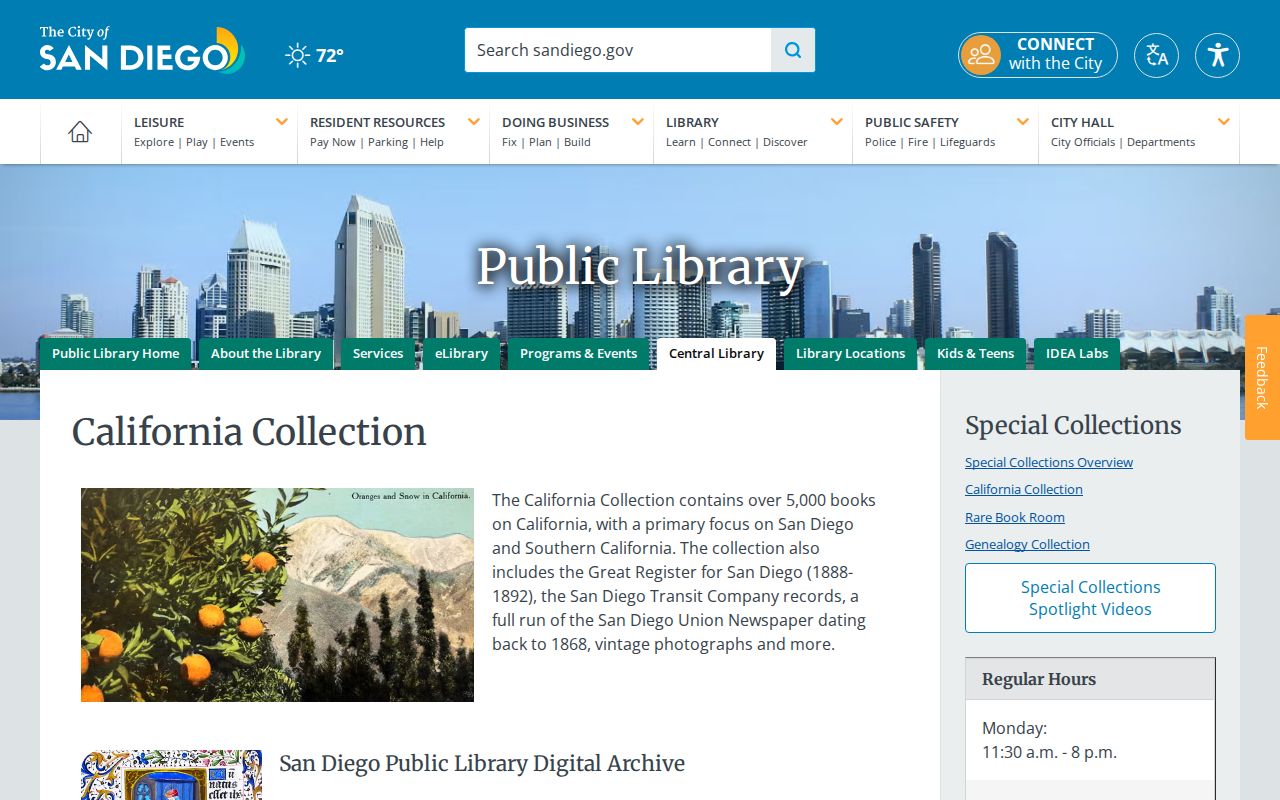
The regional shelf matters because an El Cajon entry may be housed in a San Diego-branded volume rather than a book titled for the city.
Older access can mean a library desk, a microfilm reader, a catalog request, or a research appointment. The exact El Cajon-only year run at the county library branch is not published. Ask staff to check the catalog and shelf before promising that a particular local year exists.
Why El Cajon Suburban Volumes Matter
The digitized suburban volumes from 1955 through 1960 are unusually useful for an El Cajon collection search. The collection notes that these books explicitly cover El Cajon, while the earlier San Diego volumes carry El Cajon sections in 1930, 1934, 1937, and 1938. San Diego Directory Co. published the sampled 1930s books. R.L. Polk & Co. published the 1957 suburban volume, part of a much broader commercial directory tradition.
Those labels still need care. A suburban book is a research lead, not a promise that every rural route, new subdivision, or outlying postal address appears. Check the title page, front matter, place list, and street section for each year. Postwar growth changed the edge of the city and the reach of the book. A name absent from one volume may sit in a nearby section, under a spouse, or outside that publisher’s chosen territory.
The San Diego Digital Archives city-directory collection shows why the scan itself matters. Separate PDF parts can split the alphabetical section from the numerical pages, and OCR can turn a surname into a false spelling. Read the page image, record its printed page number, and save the volume year with every note.
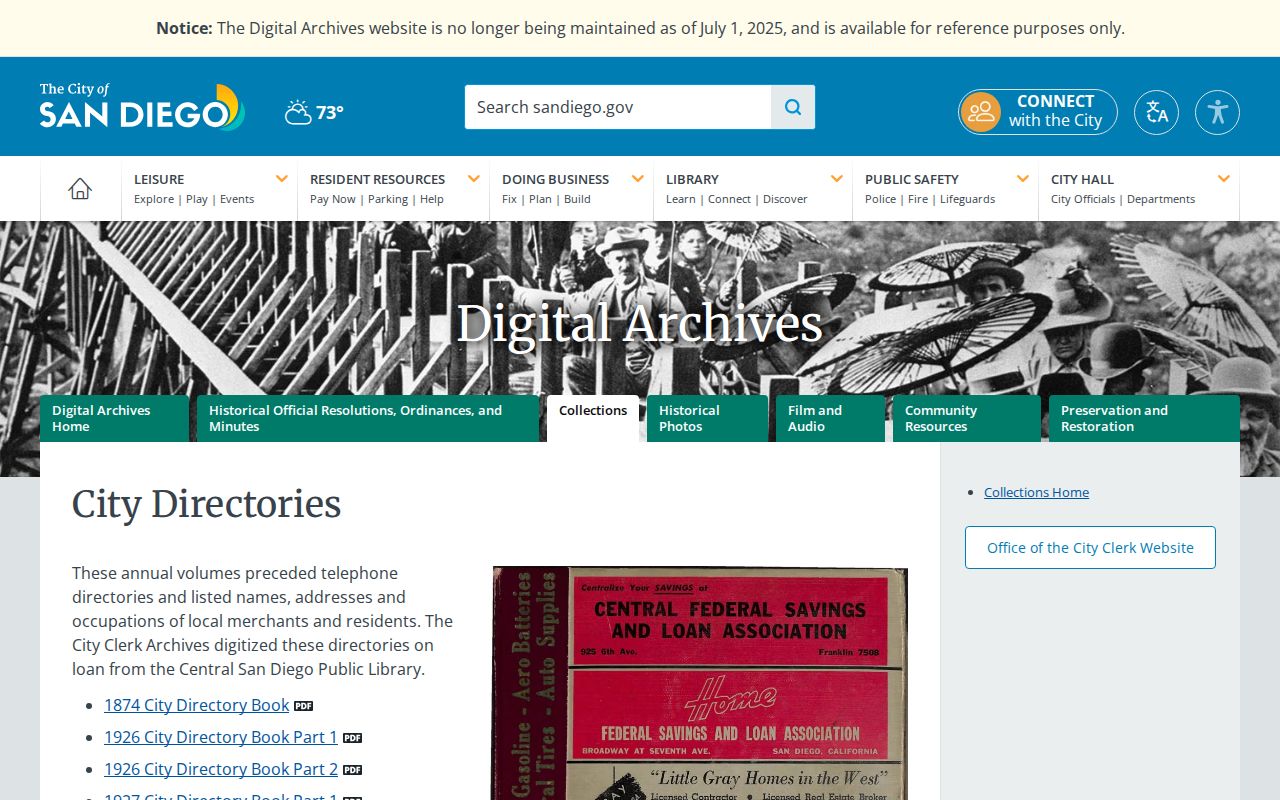
The scan is most useful when its front matter and section labels are kept with the name entry. That small record of context prevents a 1957 street listing from being mistaken for a current address or a full household list.
Note: Treat the 1955-1960 suburban label as a strong lead, then verify the coverage statement printed inside each volume.
Reading an El Cajon Directory Entry
A city directory entry compresses several kinds of local evidence into one short line. The name may be the head of household, with a spouse in parentheses. The line can then give an occupation, an employer, a residence mark, a street or rural route, a widow notation, or a separate business address. These are clues about a listed person at the time of compilation. They do not prove that every adult in the home was listed, and they do not prove that a business address was a home.
| Surname and given name | Use the printed spelling first; compare initials and alternate forms in nearby years. |
|---|---|
| Spouse in parentheses | A useful family clue, especially when two people share a surname. |
| Occupation or employer | Historical context that can separate two same-name entries; verify the entry’s abbreviations. |
| Residence and street | An address, rural route, or residence mark such as r can anchor the search. |
| Owner or home mark | The 1957-1958 sample material notes marks for telephone subscribers and home ownership; read the volume key before using one. |
| Widow notation | A form such as “wid C W” may link a person to a deceased spouse. |
- Criss-cross directory
- The street-order half of a book. House numbers run along numbered and named streets, with a listed householder or business opposite.
- Householder index
- A guide that points from a street and number to the listed person or business. It is not a census of every resident.
- Abbreviation key
- The front-matter legend that defines short marks for residence, business, spouse, widow, and other fields. Photograph or transcribe it first.
In the 1957 numerical pages, numbered streets come first, named streets follow in alphabetical order, and house numbers move in sequence. Intersecting streets can be marked at crossings. Blue paper identifies the numerical telephone department in the sample, while green paper marks the householder and street guide. The physical color is a navigation aid, not a fact about a person.
El Cajon City Directory Street Pages
The alphabetical section is the natural entry point when a surname is known. The numerical section is better when the starting clue is a house or lot. Search both when possible. A person can appear under a name in one part and under a business or street listing in another. Rural routes and community labels matter in older El Cajon entries, where a neat modern street number may not yet have been used.
The 1958 sample field inventory can list a surname, given name, spouse, occupation or employer, an h or r residence mark, a rural route, a widow notation, and business activity. It can also show that a teacher worked with El Cajon Valley Union School while a feed business used East Main and the proprietor lived in Santee. That split between work and residence is a reminder to read each field on its own terms.
Digitized text is a finding aid, not the final read. OCR may drop a first letter, merge two columns, or turn a short mark into a name. Compare the scan with the printed line, then check the next year for a stable spelling, spouse, street, or business. If the page is split across PDF parts, note the part name as well as the volume year.
El Cajon Directory Clues at Historical Society
Printed books are only one part of El Cajon’s local record shelf. The El Cajon Historical Society describes more than 200 books, people-of-note and subject files, social-organization records, diaries, letters, oral histories, clippings, obituaries, maps, and bound newspapers from 1892 through 1975. Its map material includes Rancho and subdivision maps from 1844 forward, with notable El Cajon maps from 1886, 1889, 1911, and 1918.
The El Cajon Historical Society resource collection is accessed by special appointment. Volunteer research is listed at $40 per hour. That channel is valuable when a city directory gives only a name and street, but a local file, obituary clipping, oral history, or map can supply the link. Ask for a person, place, organization, and date range rather than a broad request for everything about a family.
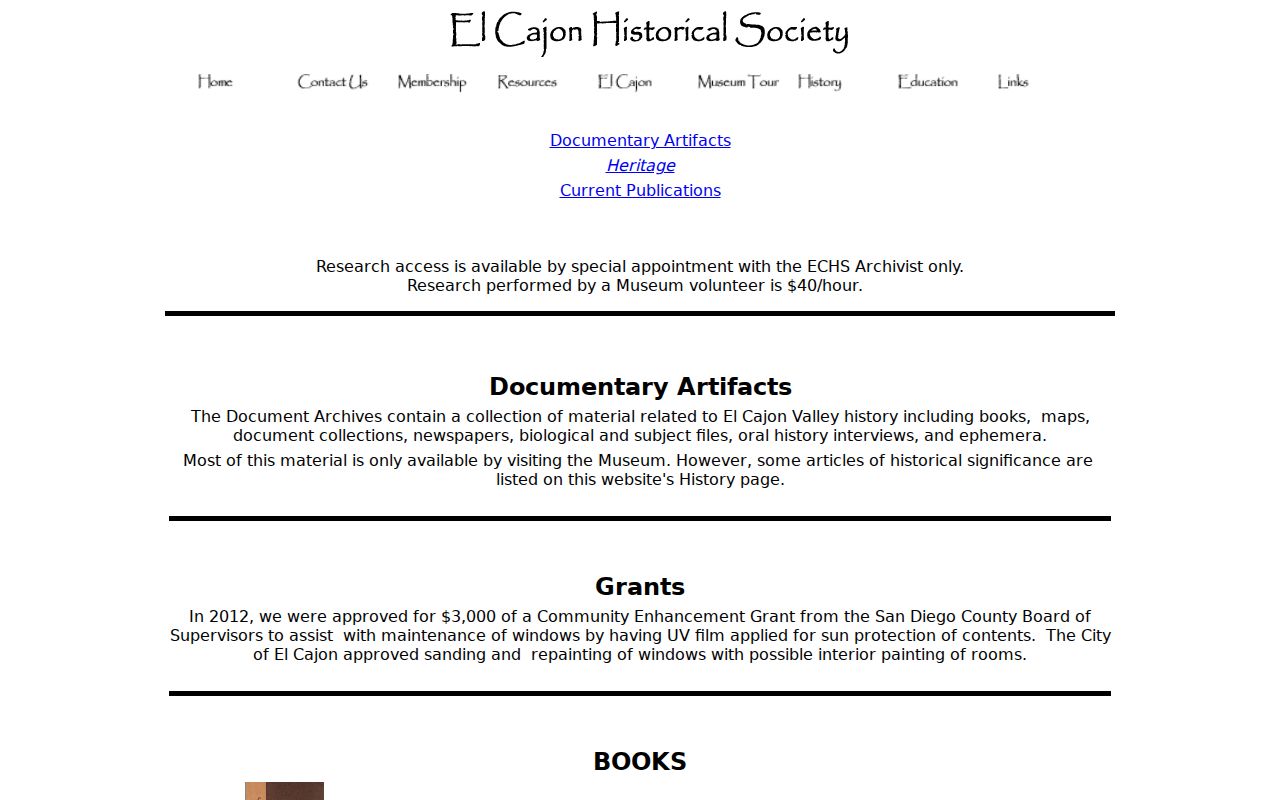
The historical society’s holdings add local depth without turning a directory entry into proof by itself. Use a clipping or oral history as a lead, then compare it with a deed, census, vital record, or dated directory line.
Note: A local file can explain a name or place, but the date and source type still matter when a family trail is reconstructed.
El Cajon Library Directory Help
The San Diego County Library branch at 201 E. Douglas Ave. has a large reference collection and a local-history collecting role. Its public branch page does not publish an exact El Cajon-only directory year run. Reference staff can check the catalog for East County newspapers, school yearbooks, community files, telephone books, and a particular surname or street. That in-person check is often faster than assuming a regional title has a complete city shelf.
The El Cajon Library branch information is the right place to verify current hours and access details before a visit. The branch is also a useful fallback for local-history databases and research help, while Central Library Special Collections remains the documented regional home for the broad city directory run.
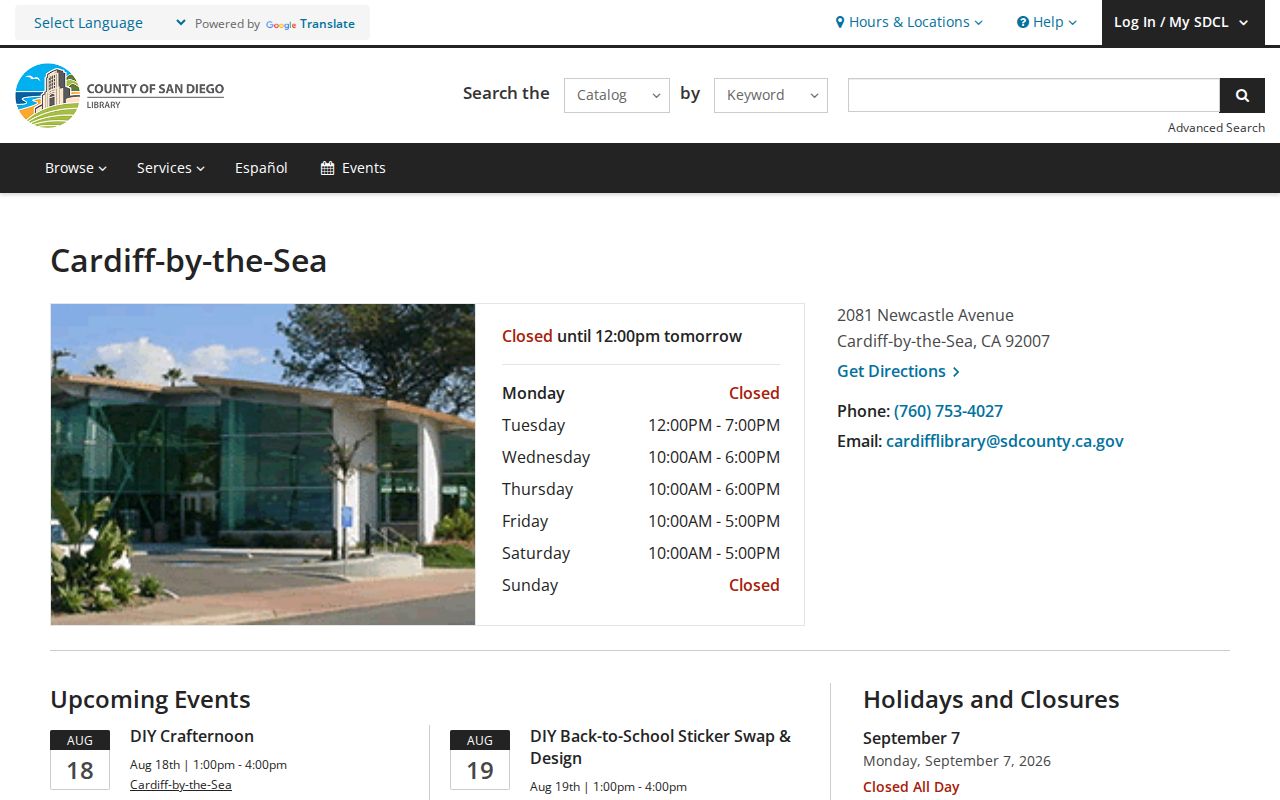
Library staff can help identify the shelf or catalog record, but a request should still name the exact year and likely publisher. That makes it easier to distinguish a city directory from a phone book, yearbook, or general history title.
Using El Cajon Directories for Family History
A city directory is compiled for a publication period, while a census records people at an enumeration point. Pairing them keeps either source from carrying more weight than it can bear. Federal census schedules from 1850 through 1950 are released under the 72-year rule. A directory from the years near 1900, 1910, 1920, 1930, or 1940 can help fill a move or household change between census points, but a person can appear in one and not the other.
- Find the surname in an alphabetical volume and record the exact spelling, spouse, occupation, and address.
- Check adjacent directory years and note every move, rural route, spouse listing, or change in the entry.
- Use the numerical or criss-cross pages to test a known house number and see the listed person or business.
- Pair the directory snapshot with the nearest released census and compare age, relationship, place, and household size.
- Close a gap with an obituary, deed transfer, probate file, map, or library-held newspaper before drawing a family conclusion.
The National Archives census resources provide the released federal access path. Census QuickFacts for El Cajon supplies present-day city context, not a person-level directory. Search a known name, then compare age, spouse, children, place, and street geography. Before El Cajon incorporated on November 12, 1912, county, township, precinct, Rancho Cajon, subdivision, and valley labels may be more useful than the later city name. San Diego County records began in 1850, earlier than the city government.
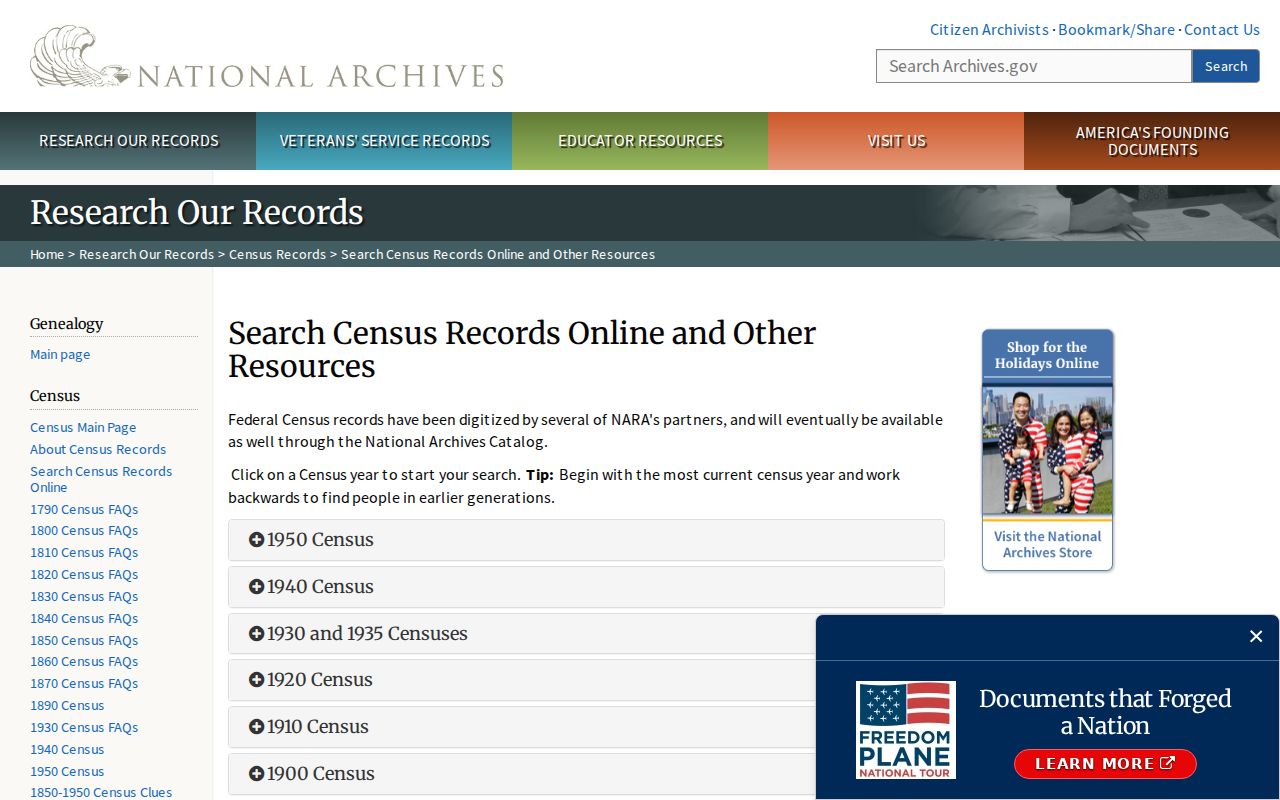
The census resource is a bridge to household size, relationship, and tenure clues. It should be paired with the directory page image and the local map for the same era, especially when a rural route or boundary label changes.
El Cajon Directory Timeline
El Cajon city directory research works best as a regional timeline. The first digitized San Diego volume is a business-oriented 1874 book. The SDPL shelf run begins in 1886, and digitized San Diego Yesterday material spans 1887-1925. City Archives contains many books from 1926-1960, including the verified El Cajon sections and the suburban bridge. The documented shelf statement reaches 2021, although the type and reach of later books can vary.
| Period | Record clue | Best reading move |
|---|---|---|
| 1874 | Early business-oriented San Diego directory | Use for regional businesses and names, not a full El Cajon household roll |
| 1886-1925 | SDPL shelf and San Diego Yesterday run | Compare alphabetical entries with maps and newspapers |
| 1930-1938 | Verified El Cajon sections in 1930, 1934, 1937, and 1938 | Read the local section and front-matter key |
| 1955-1960 | Suburban books explicitly covering El Cajon | Use numerical pages for an address-to-name bridge |
| 1886-2021 shelf statement | Broad regional collection at SDPL | Confirm each physical volume and its coverage notes |
This history also explains why a local name may shift from county language to city language without any change in the family. Growth, annexation, postal reach, and publisher choices affected how a place was labeled. A timeline is a way to sort those changes before deciding that two entries conflict.
Missing an El Cajon Directory Name
Absence from an El Cajon city directory has several possible meanings. The person may have moved, died, used a spouse’s listing, lived on a rural route, fallen outside the publisher’s territory, or been omitted from a subscriber-focused book. A scan may also be incomplete or hard for OCR to read. Compare at least one earlier and one later volume, then search the street section and nearby place names.
For a family-history trail, use an obituary or the San Diego Union collection to test a move or death, and use probate or a deed record when an estate or property transfer is involved. The San Diego History Center’s 1874 directory is a regional starting point, alongside its broader research material. FamilySearch catalog work, County Archives, maps, and school yearbooks can fill a gap, but each source has its own coverage and access rule.
When a directory lead needs a modern identity check, the El Cajon resident lookup workflow can compare a name with current official records without treating an old listing as present-day proof.