
Search the El Cajon Residents Directory
El Cajon is an incorporated city in San Diego County, but it is not the county seat. That split explains why a resident search moves between the City Clerk, the county Assessor/Recorder/County Clerk, the Superior Court, the Registrar of Voters, and California agencies. A property clue usually starts with the county assessment roll or the City GIS Hub. A person clue may start with a court party search, a state license, or a business entity. A family-history clue belongs with directories, census schedules, newspapers, vital records, and archives.
The records trail can establish a recorded owner, a party to an instrument, a filed case, a registered voter under a controlled access rule, or a historical address. It cannot turn those separate facts into proof that someone lives at a particular home today. Renters, unlisted household members, protected participants, and people represented by a mailing address elsewhere may not appear.
- Write down the known name, address, time period, and reason for the search before opening a portal.
- Use the San Diego secured assessment roll or the El Cajon GIS Hub to establish parcel geography.
- Use ARCC’s permitted phone or kiosk channel for ownership, then search the Official Records Index by party and document.
- Check the San Diego Court Index or the relevant state lookup when the clue is a case, license, business, or public filing.
- Move to the library, archive, census, newspaper, or a precise CPRA request when the question is historical or the online record stops.
That order keeps a weak name match from driving the whole search. An APN, date, spouse, occupation, parcel boundary, or document number gives the next office something exact to check.
El Cajon Resident Records Offices
San Diego County ARCC combines assessor, recorder, and county-clerk functions, but each record set has a different meaning. The assessor supplies parcel and value context. The recorder supplies indexed transactions. The County Clerk handles public and confidential marriage licenses, fictitious business names, and related filings. The county election office controls voter data. The Superior Court keeps case files at the East County Regional Center. El Cajon’s City Clerk remains the right custodian for city ordinances, permits, plans, police, fire, and administrative records.
San Diego County ARCC
Assessor, Recorder, County Clerk
(619) 238-8158 recorder line
San Diego County Assessor
Address and APN assessment search
(619) 236-3771 public information
Registrar of Voters
Personal status and controlled files
(858) 565-5800 information
The office matters as much as the search term. A city permit request sent to the county will miss the file, while a county parcel inquiry will not replace a city inspection record. A clear address, APN, date span, department, and requested format helps the custodian find a releasable record.
El Cajon Residents: Parcel Search Comes First
The most useful first anchor is often a parcel, not a person. The 2026 secured assessment roll accepts a street number and street name or a full APN. Its result can show the APN, situs address, assessment year and lien date, land and improvement values, total assessed value, exemption indicators, factored base-year value, and change or appeal notices. Online owner names are withheld under California’s home-address publication rule. The roll is a map and value tool, not an open household list.
El Cajon’s GIS Hub adds boundaries, ZIP layers, parcels, zoning, council districts, street sweeping, resurfacing, benchmarks, and development projects. Select a parcel to preserve its location and APN, then compare the city boundary with the postal label. Ownership or title still requires ARCC’s phone or kiosk channel. The same parcel can also lead to a permit jacket, a recorded deed, or a tax record without proving who occupies it.
| Address / Location | Text or autocomplete; normalize directionals and street suffixes. |
|---|---|
| Parcel / APN | Text; the research uses a hyphenated pattern such as 123-456-78-90. |
| Permit / Case Number | Exact key when a city planning or building record is known. |
| Record Type | Building, planning, engineering, or enforcement category when offered. |
| Date Range and Status | Use a broad date pair, then narrow by issued, active, final, expired, or cancelled status when available. |
“Situs” means the parcel’s physical location. A tax mailing address is where correspondence goes and may belong to an owner somewhere else. Keeping those fields separate prevents a directory search from treating a tax destination as a residence.
- Roll
- An assessment listing that describes a parcel, value, exemption, or lien-date detail.
- Index
- A searchable record of recorded parties and instruments; it is not the document image itself.
- Criss-cross directory
- A historical street-and-number listing that can pair an address with a named householder or business.
- Parcel
- A mapped tax unit identified by an APN, which may differ from a building, unit, or household.
El Cajon Residents and the Recorder Deed Index
The ARCC Official Records Index begins in 1970 and is free to search. It can return indexed party names, the role or context in which a party appears, document type, recording date, document or recording number, and book/page or related references when present. Deeds, deeds of trust, reconveyances, liens, releases, notices, maps, and other recordable instruments may appear. The online index does not display the full document image. Images are viewed at an ARCC kiosk or obtained through a paid mailed-copy process.
Search a current owner or grantee, then match the instrument to the APN, legal description, vesting, spouse or trust name, and recording date. A grantor is the seller or person conveying an interest. A grantee receives it. The index shows a recorded transaction, not a current resident. Since AB 1785 removed APN searching from the online recorder search on December 9, 2024, APN work remains available at five public kiosks. Older deeds route to County Archives, books, microfilm, or a targeted genealogy request.
- Party name
- Try surname, organization, trust, spouse, and spelling variants; a match does not prove that the party lives at the parcel.
- Document type
- Separate deeds, liens, releases, maps, and reconveyances; an instrument is not automatically a residence record.
- Recording date
- Narrow common names and build a chronology; it does not establish the date someone moved in.
- Document number
- Use it to request or view the exact image; the index alone does not provide the complete terms.
Owner Alert is a related fraud-prevention channel. It can monitor up to ten names and ten APNs per email and send a document number and index link after a matching instrument records. It does not reveal the document contents or prevent recording.
El Cajon Ownership by Phone
The web assessment roll can show assessed value while omitting the owner. That asymmetry is deliberate. When ownership or a property mailing address is necessary for a lawful personal research question, ARCC identifies the permitted phone and public-kiosk routes. Bring the APN, exact situs, subdivision or lot information, and a clear question. A clerk can explain access and copy steps; a phone answer should not be treated as an oral identity certification.
Property maps, building records, and recorded instruments serve different purposes. A permit may name an applicant, owner, architect, or contractor at the time of work. A tax record can show billed parcel information. A deed establishes a transfer and legal description. None alone lists every adult in the home. The best El Cajon residents directory workflow keeps each claim tied to the record that actually supports it.
| Source type | Useful for | Limit |
|---|---|---|
| Official rolls and indexes | Custodian-held parcel, party, value, or filing facts | Defined coverage, access rules, redactions, and date limits |
| Commercial people-finder tools | Convenience leads from mixed public and inferred data | May merge names, lag transfers, and lack a verifiable source trail |
Ownership and parcel access choices are shown on the ARCC property-records page. The county’s public channels are more useful when an address is exact and the request does not ask for a broad, unsupported roster.
The San Diego County ARCC service hub points to the phone, map, kiosk, and office paths for property information.
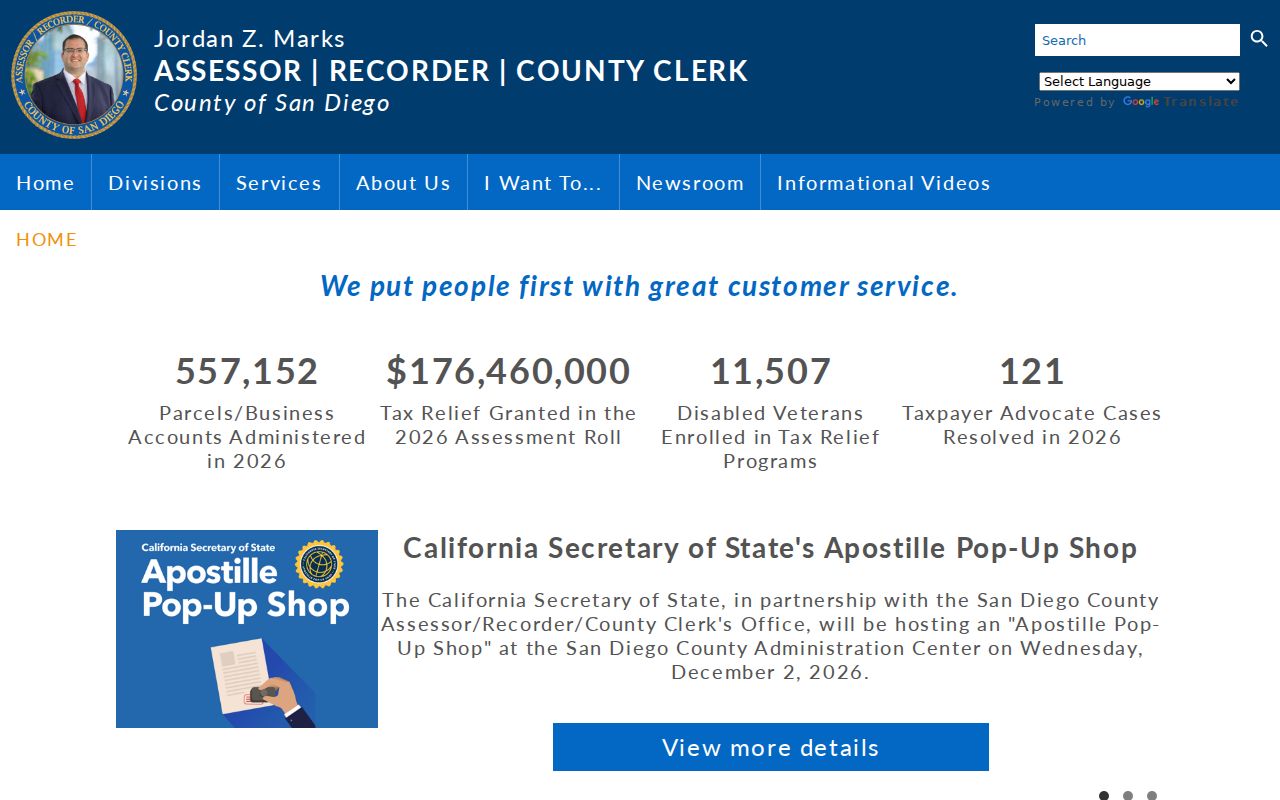
That county service map is the practical center of an El Cajon residents directory search, but the parcel and deed layers still need to be read as separate evidence.
Current El Cajon Resident Directories
Modern sources are best treated as focused rolls. Each has a keeper, an access rule, and a boundary on what it can say. The table below distinguishes a property lead from a residence clue, a filed party from a household member, and an official work contact from a private address.
| Source | What It Lists | Keeper | Access |
|---|---|---|---|
| Secured assessment roll | Parcel, value, exemptions; ownership through permitted channel | San Diego Assessor | Address/APN web search; owner phone/kiosk |
| Official Records Index | Parties to deeds, liens, releases, and maps | ARCC Recorder | Free 1970-present index; image kiosk or copy |
| My Voter Status | Authenticated voter’s own status and polling data | California Secretary of State | Personal identifiers required |
| City staff pages | Official work roles and contacts | City of El Cajon | Public web pages |
| Business and license files | Entity, agent, credential, or public discipline details | California agencies | Free focused searches |
The right source follows the question. A current address inquiry may need parcel geography and a permitted ownership channel. A family-history question may need an obituary, directory, census, or probate file. A professional affiliation belongs in a license or business filing, not a property roll.
Results can be stale, redacted, limited by date, or tied to an organization instead of a person. Save the source name, date checked, exact spelling, and record number so a later custodian request can be reproduced.
El Cajon Residents: Voter Status Is Personal
California My Voter Status is authenticated self-service. It asks for first name, last name, date of birth, and either a California driver license or ID route or the last four digits of a Social Security number. It can show the authenticated voter’s registration status and location, party preference, language preference, polling place, upcoming election information, and vote-by-mail or provisional-ballot status. It is not a public El Cajon residents directory and cannot be used to enumerate a street.
Voter-file access is purpose-limited by Elections Code §2194 and 2 CCR §§19001-19013. Qualified requesters may apply for a statewide or county file, with requester identity, organization, intended use, security declarations, and a signature. Released fields can include name, residence or mailing address, party preference, registration date, precinct, districts, and participation, while driver-license numbers, Social Security numbers, signatures, and confidential participants stay protected. Voting history shows participation, never ballot choices.
- First and last name
- Required exact voter-record fields.
- Date of birth
- Required personal authentication field.
- California DL/ID
- One identity route; the form allows a no-number selection.
- SSN last four
- Alternate identity route; both identifiers improve matching.
California My Voter Status is the precise personal entry point. The state voter-file rules explain why a controlled file cannot become an open neighbor list.
The authenticated California voter form shows the personal fields required for a status check.
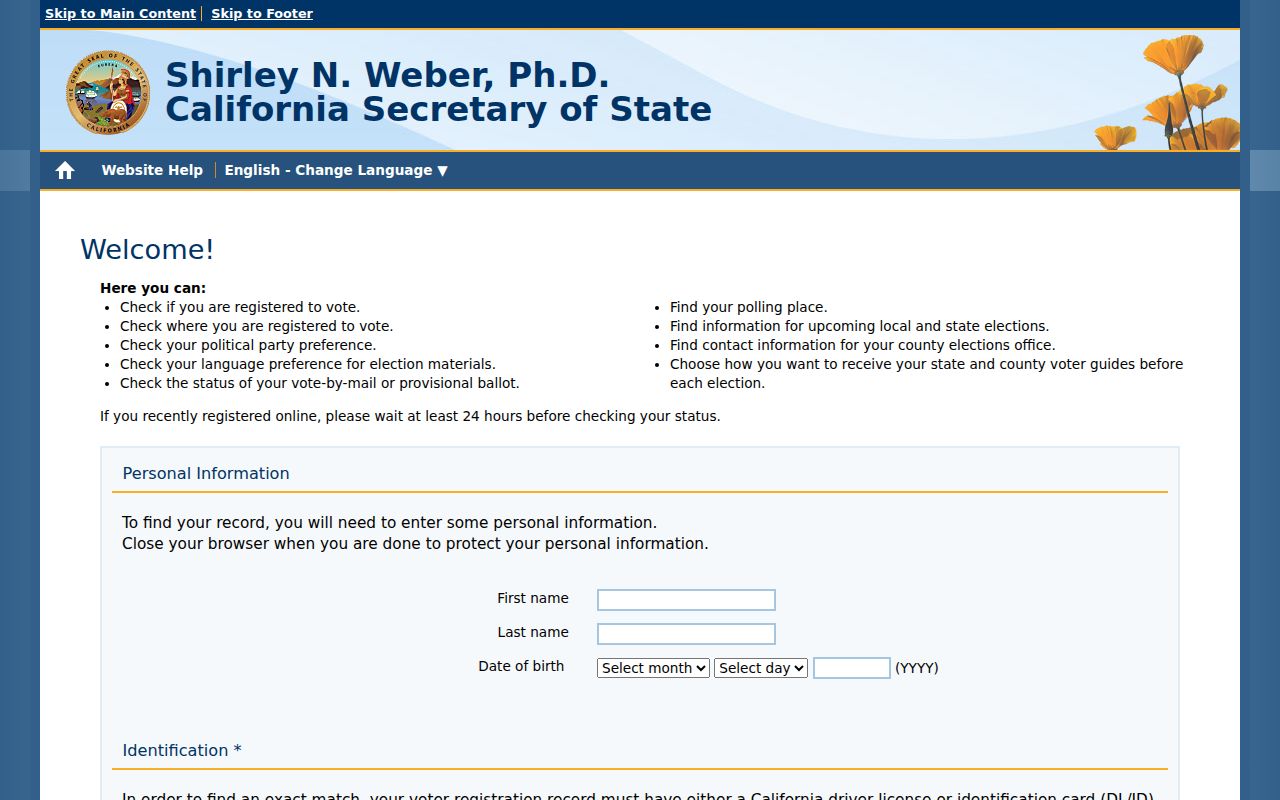
The authentication screen reinforces the key distinction: a personal record check is not permission to publish or infer the registration details of other El Cajon residents.
El Cajon Resident Court Index Checks
The Superior Court’s East County Regional Center at 250 East Main Street handles criminal, family, civil-harassment and elder-abuse restraining-order, and juvenile-dependency matters. The public Court Index searches by party name, case number, or DA number. It can identify a case and filing details exposed by the index, but it does not provide charges or disposition. Pre-1974 cases, juvenile matters, traffic and minor-offense categories, sealed records, and protected family details require special caution or are absent.
A court hit is a lead, not a conclusion about a person. The clerk’s official file, register of actions, a specific document, or a certified copy is needed to understand role and outcome. Federal cases route through PACER for the Southern District of California. PACER uses an account and charges $0.10 per page, capped at $3 for a single document, with the current quarterly fee-waiver threshold applying.
For a current custody question, the San Diego County Sheriff Who’s in Jail search is a separate, current system. It can show booking and custody fields as available, but absence is not proof of no prior case and a booking is not a conviction.
The Sheriff’s current custody search is a focused lookup rather than a complete resident record.
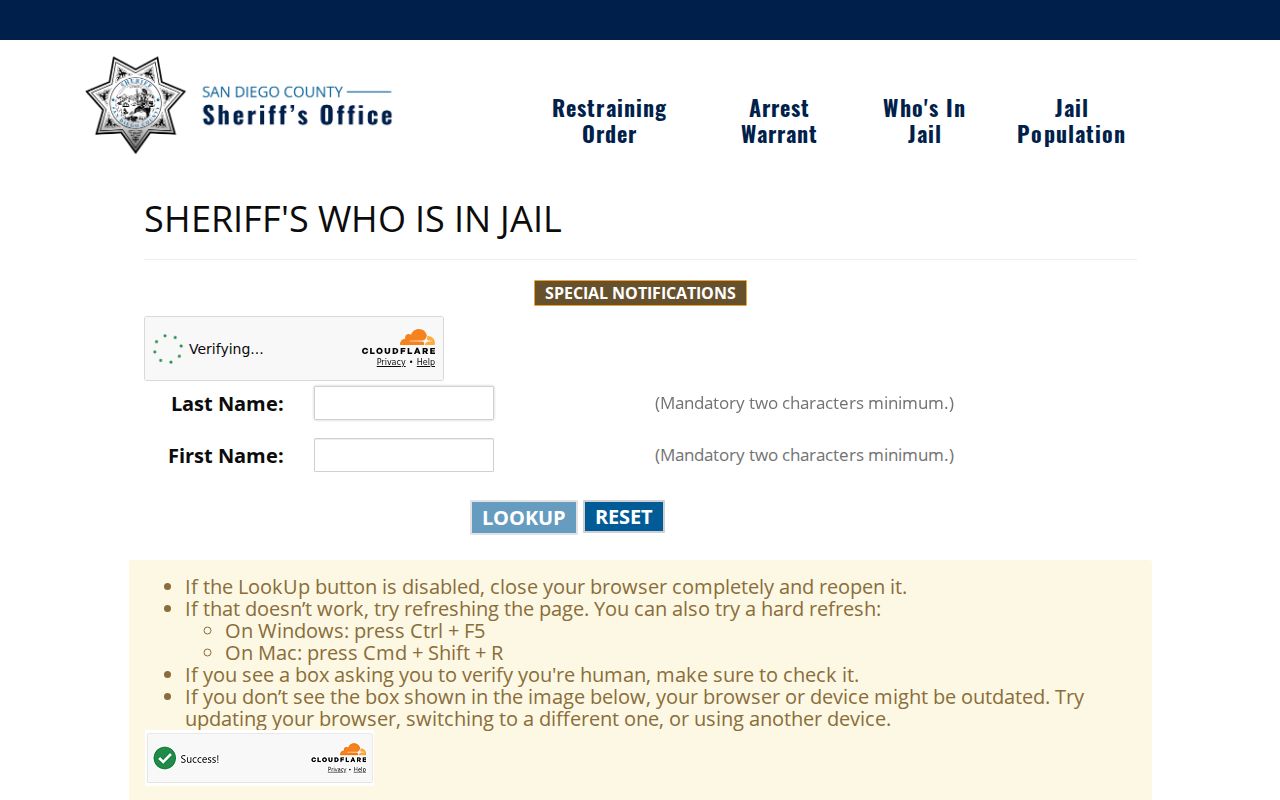
Its limited purpose is a useful reminder that every name search needs a date, keeper, and record-type check before the result is given broader meaning.
El Cajon Resident Vital Record Paths
Birth, death, public-marriage, confidential-marriage, and divorce records are five different searches. San Diego ARCC and the California Department of Public Health share or divide custody by record and year. Statewide birth and death files begin in July 1905. California uses informational and authorized copy classes rather than one simple closed-for-years rule. Most nonconfidential informational copies can be requested by any requester, while authorized certified copies are limited by Health & Safety Code §§103526 and 103526.5.
Confidential marriage records are restricted under Family Code §511. Adoption files and original birth records remain sealed unless a statute or court process permits access. A divorce certificate is not the decree; the Superior Court holds the decree or complete case file. Mail forms ask for the applicant, relationship or eligibility, event date and place, names before marriage, parents’ names for a birth, spouse names for a marriage, copy class, signature, and fee. Authorized mail requests generally require a notarized sworn statement.
- Birth
- San Diego ARCC or CDPH; authorized versus informational copy. The 2026 fees noted are county $34 and CDPH $31.
- Death
- San Diego ARCC or CDPH; copy class and year rules apply. The 2026 fee noted is $26.
- Public marriage
- ARCC or CDPH; confidential marriage is a separate restricted route. The 2026 CDPH fee noted is $19.
- Divorce
- Superior Court holds the decree, with a limited CDPH certificate route. The 2026 CDPH dissolution fee noted is $18.
For pre-July-1905 events, use county registers, church or cemetery records, newspapers, and FamilySearch catalog material. A vital record confirms an event and named relationships; it does not make a person’s current residence public.
Historical El Cajon Resident Directories
Historical El Cajon residents directory work is regional. San Diego Public Library’s California Collection documents city directories from 1886 through 2021, while digitized runs divide between San Diego Yesterday for 1887-1925 and City Archives for 1874 and many 1926-1960 volumes. El Cajon appears in verified 1930, 1934, 1937, and 1938 sections. The suburban books for 1955-1960 are the strongest documented bridge for El Cajon address-to-name research.
San Diego County records began in 1850, decades before El Cajon incorporated on November 12, 1912. That history changes the label under which a person appears. Search county, township, precinct, Rancho Cajon, subdivision, valley, and later city terms. A directory is a compiled snapshot, not a census-night record, and a missing name can mean a coverage boundary, a move, a spelling variation, or an unlisted household.
The El Cajon city directory collections page follows the shelf runs, publishers, entry marks, and household-tracing method in greater depth.
El Cajon Library Directory Shelves
The El Cajon branch at 201 E. Douglas Ave. is part of San Diego County Library. SDCL identifies El Cajon and Vista as branches with large reference collections and describes local-history collecting that includes photographs, documents, and oral histories. Exact El Cajon-only directory shelf years were not published on the branch page, so reference staff should confirm a catalog or shelf inventory before a year is treated as complete.
San Diego Public Library Central Special Collections is the better documented regional fallback. It holds directories, the 1888-1892 Great Register, the San Diego Union from 1868, photographs, more than 800 maps, and Sanborn materials. A research request should name the surname, street, likely year, directory type, and whether a numerical or alphabetical section is needed. The front matter and abbreviation key should be read before names are transcribed.
A criss-cross directory reverses the usual name-first order. Streets appear in numerical or alphabetical sequence, house numbers run along the block, and a listed householder or business sits beside the number. The volume may mark homeowners, telephone subscribers, widows, spouses, rural routes, or a business address. Those marks are valuable clues, but they do not list every adult in a household.
El Cajon Business and License Trails
Some searches are about a person’s public affiliation rather than a home. California Secretary of State bizfile Online can return an entity name or number, status, formation or jurisdiction, addresses, agent for service, filing history, and documents where available. A registered agent is a service contact, not necessarily an owner or resident. The county FBN channel adds trade-name statements and registrant details. Use both when a business name changed over time.
California Department of Consumer Affairs searches license type, number, name, and location fields offered by the board. Results may show status, issue or expiration dates, public discipline, and an address of record. Contractors, attorneys, educators, and regulated professions can have separate systems. A license address is a professional or mailing clue and should not be converted into household evidence.
The California license search provides the public professional lookup route.
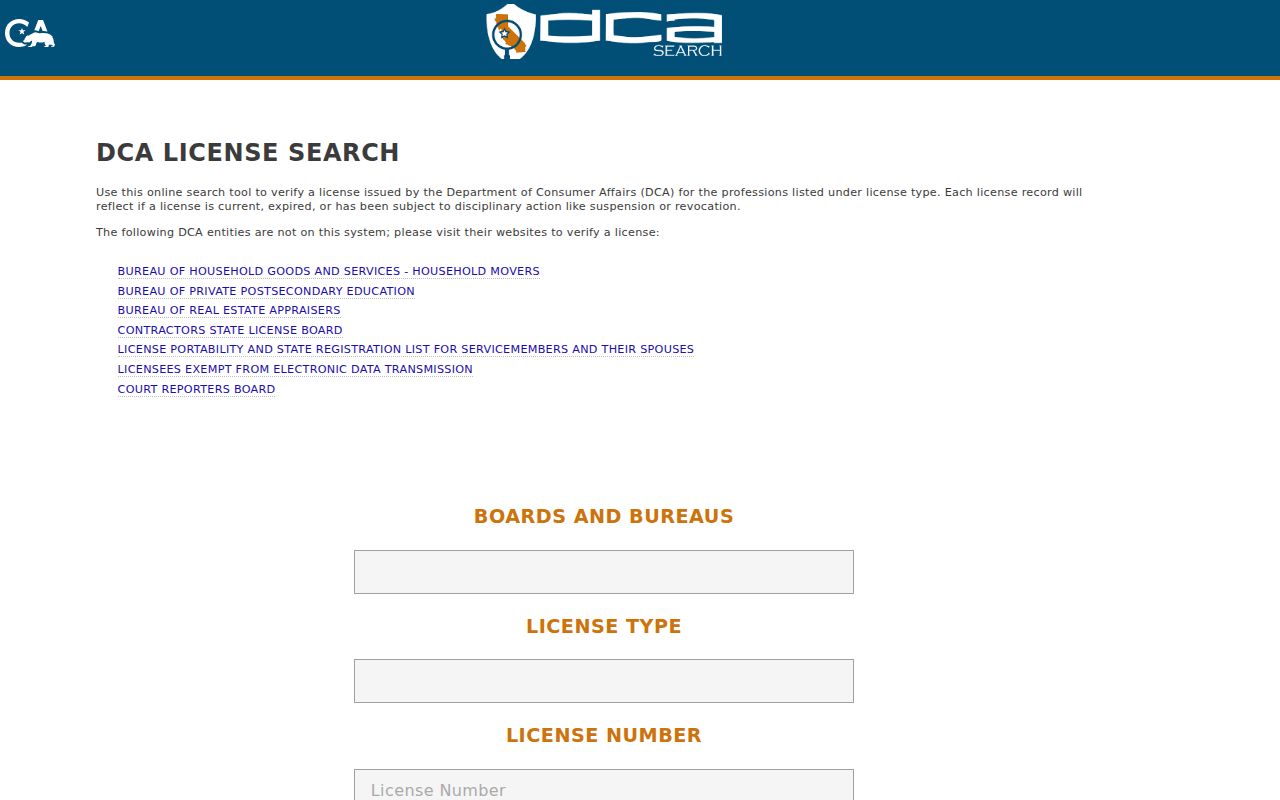
That focused result can corroborate a name, role, or business connection while keeping the lookup within the record type the agency actually publishes.
Bizfile Online supplies the state entity-search route for business names and numbers.
Entity filings help distinguish a company address from a person’s residence and can point to a better custodian for a records request.
El Cajon Unclaimed Property Leads
The State Controller’s unclaimed-property search accepts last name or business name, first name, middle name, city, and ZIP. A match can expose an older owner-name or location fragment, holder, property ID, or property type. Claiming funds requires proof of identity and ownership. The result is a historical lead, not a current residence check, and a stale address can remain in the file long after a move.
It can be useful when a surname is uncommon or when a family-history search needs a second location clue. Compare the result with a directory, obituary, deed, or business filing. Start at the official state search and ignore unsolicited recovery demands. The official State Controller route is free to search and claim.
The California unclaimed-property search shows the state’s name-and-location fields.
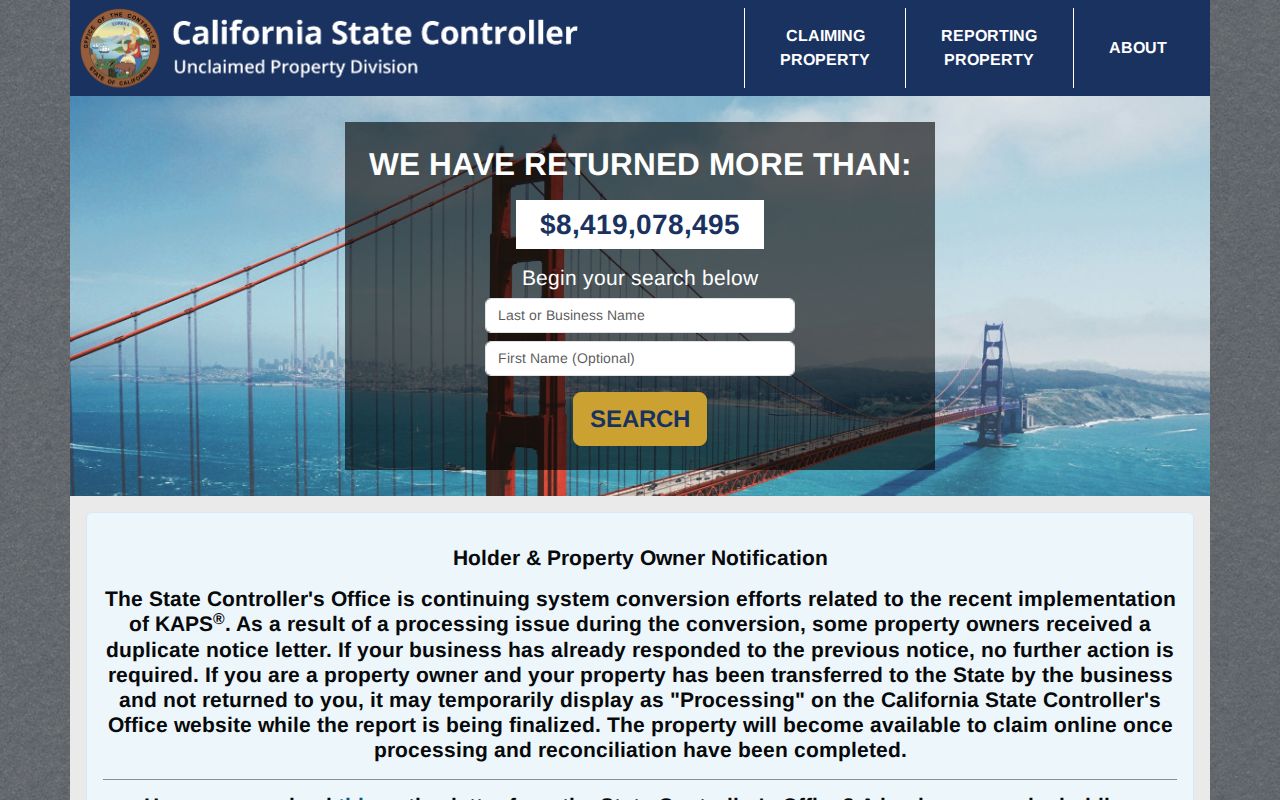
A name match is worth a follow-up record check, but it should never be stated as proof that the claimant or listed owner lives in El Cajon now. The California service description is another official explanation of the state search and claim route.
El Cajon Public Record Requests
The El Cajon City Clerk is the fallback when a municipal record is not posted. Request routes are labeled General, Police, Fire, and Property. When several departments are involved, city guidance says to submit one General request rather than duplicates. The request can go through the city channel, email, mail, or in person. The form asks for name, phone, email, record type, subject property address, description, desired delivery, and signature.
State the department, date span, address or APN, project or permit number, and preferred electronic format. Ask for a permit history, inspection status, or releasable permit jacket instead of “all records about a person.” Building and planning files may identify an applicant, owner, architect, or contractor at the time of work. Code-enforcement files may identify an address and case chronology, while complainant and active-investigation information can be withheld.
Under the California Public Records Act, Government Code §§7920.000 et seq., an agency normally determines disclosure within ten calendar days and may issue a written fourteen-day extension for unusual circumstances. Inspection is normally free; direct duplication costs may apply. The request process does not require the city to create a new residents directory or release exempt personal information.
El Cajon Privacy and Opt-Outs
Privacy barriers are part of an accurate El Cajon residents directory search. California’s Safe at Home program gives covered survivors and protected public workers a substitute address. Government Code §§6205-6211 and related rules limit publication of participant addresses, phones, and images. Voter identifiers, signatures, Social Security numbers, motor-vehicle data, sensitive recorded numbers, and protected court details can also be withheld.
The California Consumer Privacy Act, Civil Code §§1798.100 et seq., gives covered consumers rights to know, delete, correct, limit sensitive-information use, and opt out of sale or sharing. The 2026 DROP framework allows one deletion or opt-out request to registered data brokers; the Attorney General reported that the tool reaches more than 500 brokers. Use the official channel, verify only what is needed, and keep the confirmation.
When a record is wrong, return to the custodian that created it. A commercial compilation may merge same-name people, lag a transfer, or infer a relationship. It cannot override an official suppression rule. Lawful personal research, family history, estate work, civic curiosity, and scam avoidance are appropriate purposes; stalking, harassment, intimidation, or threats are not.
El Cajon Records Across Time
El Cajon’s record story is one of changing custodians and labels. Rancho Cajon was granted in 1845, Lankershim interests acquired much of it in 1868, and Amaziah Knox built a hotel and residence at Main and Magnolia in 1876. The city incorporated after 123 of 158 electors approved a 1.25-square-mile city in 1912. Population and annexation later changed the place described by a directory, permit, or postal line.
County Archives reports official-record holdings from 1848-1959, historic birth and death material from 1849-1986, marriage material from 1856-2020, maps from 1854 forward, and administrative series from 1881-2011. Those holdings sit beside the modern ARCC index, the city GIS Hub, court files, library shelves, and state systems. The best search keeps the date and jurisdiction visible.
“El Cajon” may mean the incorporated city, a postal area, the historic valley, or El Cajon Boulevard in the City of San Diego. A record that looks like a match can belong to another jurisdiction. Check the map, custodian, date, and record type before accepting it as part of the El Cajon residents directory.