
El Cajon Resident Lookup Coverage
An El Cajon resident lookup is a chain of narrower checks, not one master list. The county assessor can anchor a property and APN, while the recorder can identify parties to a recorded instrument. A court index can identify a case, but not its charges or disposition. Vital records confirm an event subject to copy rules. Directories and census schedules add historical context. Voter status is an authenticated personal service, not an open name search. The right first check depends on whether the goal is a current property clue, a court identity, a family event, an old address, or a public business affiliation.
| Record | What It Confirms | Where to Search | Access |
|---|---|---|---|
| Parcel or assessment | APN, situs, values, characteristics, and possible mailing lead | San Diego secured roll | Address or APN online; owner by phone or kiosk |
| Recorded deed or instrument | Named parties, transfer type, date, number, and legal-description clues | San Diego ARCC Official Records Index | Index 1970-present; image by kiosk or paid copy |
| Court case | Party name, case identity, category, location, and filing data shown by the index | San Diego Court Index or East County clerk | Free index; file and copies through clerk |
| Birth, death, marriage, or divorce | Event and named parties or parents when the record and access class allow | County ARCC, CDPH, or Superior Court | Informational or authorized copy rules; fee applies |
| Business or professional record | Entity, agent, license status, filing address, or public discipline | California business and license portals | Basic searches generally free |
| Directory or census | Historical address, household, relationship, occupation, or place context | SDPL, NARA, library, or archive | Library, scan, or genealogy access |
| Voter status or approved file | Authenticated registration status, or controlled fields for an approved purpose | California My Voter Status or ROV request | Personal authentication or Elections Code access |
Property and deed records are strongest when an address is known. Court and vital channels are stronger when the name and event are known. A directory or census search is the better first move for a former classmate or deceased relative. Each result should be saved with its date, source, and limit so a lead does not become an unsupported claim.
An El Cajon Resident Identity Matrix
Same-name errors are the main risk in a one-person resident lookup. Build a small matrix before drawing a conclusion. Put the candidate name in one column, then add middle name or initial, spouse or associate, address or APN, age or event date, business or profession, and the record’s date. A city match by itself is weak. Two independent facts that line up in time are stronger, but an old directory still cannot prove a current connection.
Transliteration deserves special care in El Cajon. Chaldean, Arabic, Spanish, and other names may appear with changed spacing, prefixes, reordered given and family names, or clerical variants. Search exact and shortened forms where the portal permits. Compare an address, parcel, spouse, business filing, or court role before treating two spellings as one person.
- Property ownership is a county-held clue, not proof of present occupancy.
- A tax mailing address can point to correspondence and differ from the parcel’s situs.
- A registered agent is a service contact and may not be an owner or resident.
- A court party is not automatically the person who committed an offense.
- An obituary is a secondary lead that should be paired with probate or vital records.
Record the negative result too. “No match” may mean the wrong spelling, a withheld record, a category exclusion, or a portal that starts later than the event. A careful resident lookup states which of those limits was tested.
El Cajon Resident Lookup Court Fields
The East County Regional Center at 250 East Main Street in El Cajon handles criminal, family, civil-harassment, elder-abuse restraining-order, and juvenile-dependency matters. The local filing and records number is (619) 456-4100, and juvenile dependency uses (619) 456-4238. Many business offices publish weekday phone-answer hours of 8:30 to 11:30 a.m.; confirm counter hours before visiting.
The court search does not ask for a vague personal profile. It gives three useful modes: Party Name, Case Number, and DA Number. Use the recorded spelling first, then add a first or middle name only after the broad surname pass. Choose an East County location when known, but do not assume every El Cajon party filed there.
| Party Name | Last name or business name, with first and middle names available as narrowing fields. |
|---|---|
| Case Number | An exact case key; long formats may appear without hyphens. |
| DA Number | A criminal-prosecution identifier used in the DA search mode. |
| Case Type | Categories such as civil, criminal, family, mental health, or probate when offered. |
| Case Location | A location filter that can help route an identified case to the right clerk. |
- Docket
- The court’s case record or register of actions, which gives procedural history rather than a simple name match.
- Index versus image
- The online index identifies a case and selected fields; the filed image or register is needed for the underlying document.
- Certified copy
- A clerk-issued copy with formal authentication for a permitted use; it is different from a screen result or plain photocopy.
The East County Regional Center information confirms the local courthouse route. A search result can identify party name, case number, type, filing location, and filing date or status fields, but the actual file is the place to request a register of actions, document, or certified copy.
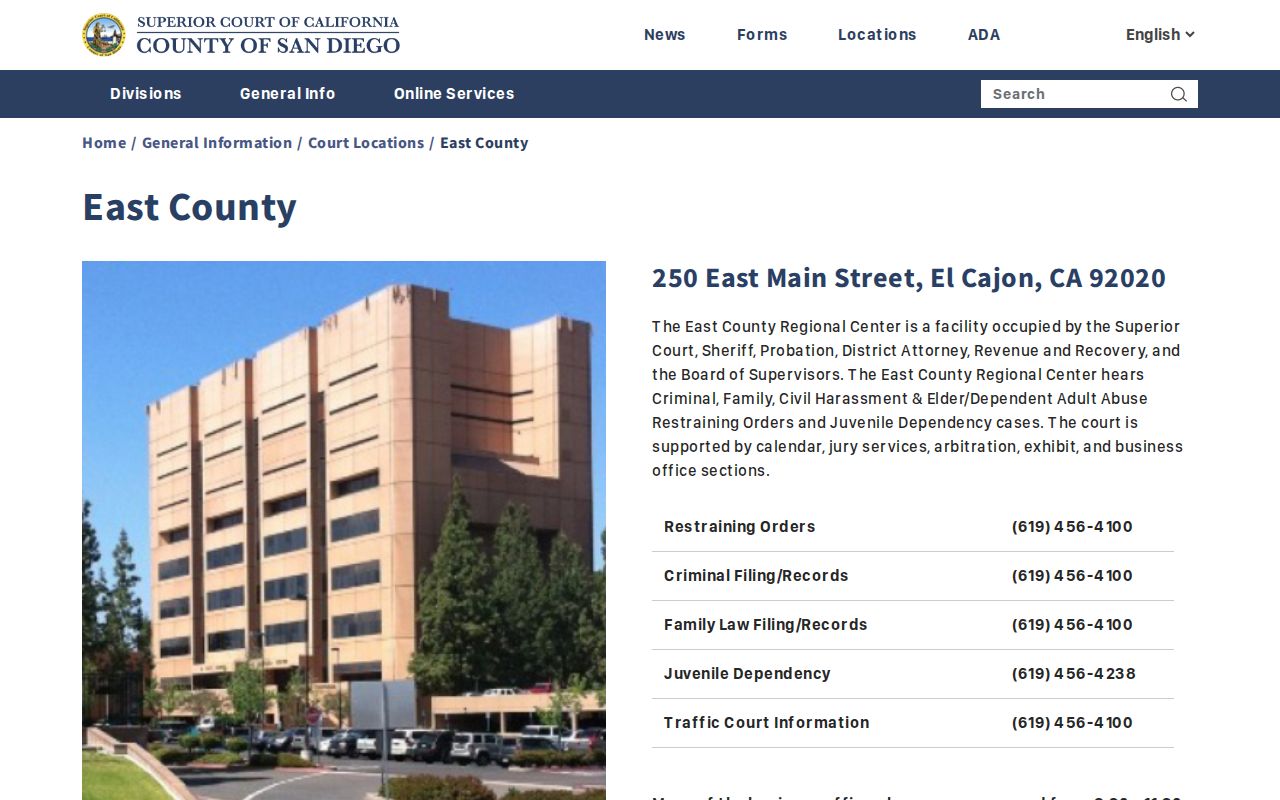
The courthouse image is a routing aid, not a substitute for the clerk’s file. Juvenile, sealed, confidential, adoption, and protected family details remain unavailable through ordinary public searching.
Reading an El Cajon Resident Court Hit
A court-index hit should be read as case identity data. It may show the party, case number, category, filing location, and filing or status fields. It does not provide charges or disposition. The San Diego Court Index generally reaches 1974 to the present, excludes juvenile and traffic or minor-offense matters, and has category-specific retention limits. Older material may be on self-service microfilm, and staff do not conduct that research for the requester.
The San Diego court-record search guidance is the place to confirm current scope. A criminal case can remain in the index when it was dismissed. That persistence is why a case hit cannot be treated as guilt. Request the official register or filed document when the issue turns on an outcome, role, or date.
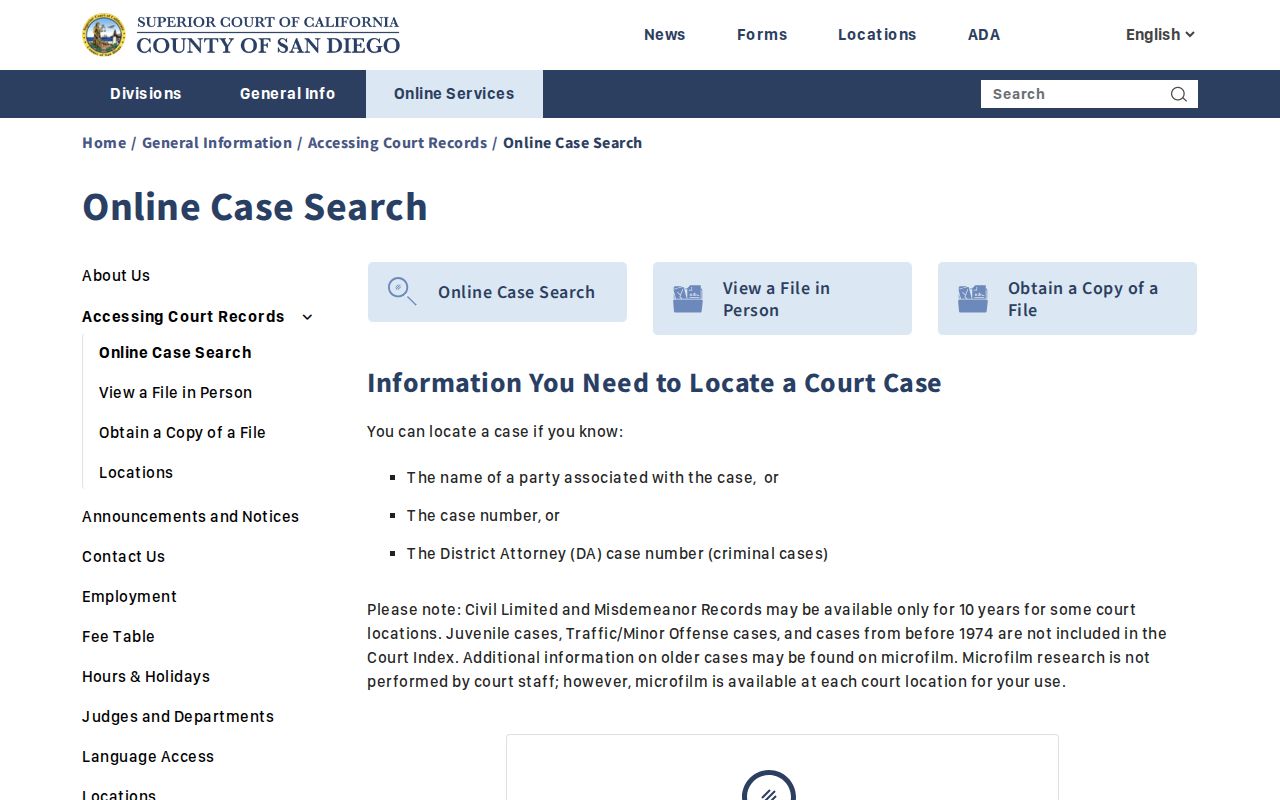
The court search screen helps narrow a name, while the clerk’s counter establishes what document can actually be copied. Federal matters use PACER in the Southern District of California. PACER charges $0.10 per page, caps a single document at $3, and waives fees below the current quarterly threshold.
The PACER federal court search image shows the separate federal path. Sealed documents are not available. A federal case, like a state case, must be read in its own procedural setting rather than folded into a broad conclusion about a person.
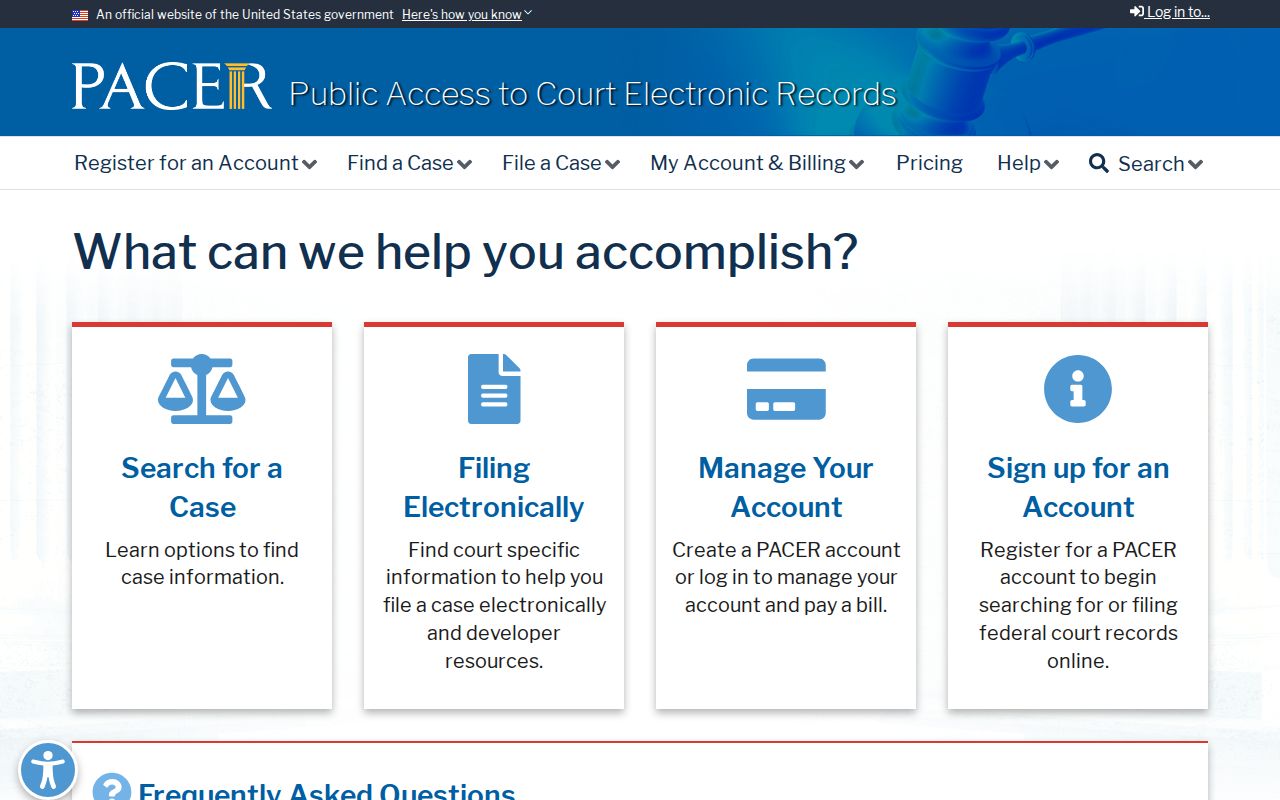
State and federal indexes answer different questions. Save the case number and court before requesting a file, and keep any conclusion tied to the actual record.
El Cajon Vital Record Lookup
Vital events are four different searches, with different custodians and copy classes. San Diego ARCC and the California Department of Public Health handle county and statewide birth, death, and public-marriage channels. A divorce certificate is not a divorce decree. The certificate has limited state data, while the decree and complete file come from Superior Court. Confidential marriage records go through the county that issued the license under Family Code section 511.
| Birth | State files begin in July 1905. County and CDPH copies use authorized or informational classes; 2026 fees are $34 county or $31 state. |
|---|---|
| Death | County or CDPH copy route, with authorized and informational distinctions; the 2026 county and state fee is $26. |
| Public marriage | County license or CDPH route when supported; 2026 fees are $19 at both listed state and county schedules. |
| Confidential marriage | Restricted to parties or a court process through the issuing county under Family Code section 511. |
| Divorce or dissolution | Superior Court holds the decree; CDPH dissolution certificates cover limited years and cost $18 in 2026. |
The California vital-record service route is not a general name index. The CDPH fee schedule is separate from the county schedule, and the ARCC fee schedule controls county charges. Health and Safety Code sections 103526 and 103526.5 limit authorized certified copies, while other requesters can generally seek an informational copy marked as not valid for identity purposes. Mail forms ask for the applicant, relationship or eligibility, purpose, event date and place, and the names of parents or spouses where relevant. Authorized copies need a sworn statement, and a mailed sworn statement generally must be notarized.
In-person requests require government identification. Payment may be cash, check, money order, or card, with a listed card fee of $2.50; VitalChek adds its own handling and delivery charges. A no-record result can still retain the search fee. For pre-July-1905 events, use county registers, church records, cemeteries, newspapers, and FamilySearch catalog material rather than assuming a state portal has the answer.
El Cajon Voter Status for Residents
California’s voter-status service is a useful identity safeguard precisely because it is not an open residents directory. The person enters first name, last name, date of birth, and a California driver license or ID route, or the last four digits of a Social Security number. The result can show registration status, location, party preference, language preference, polling place, election information, and vote-by-mail or provisional-ballot status for the authenticated voter.
The California voter registration status guidance image makes the privacy boundary plain. Close the browser after a personal lookup. Elections Code section 2194 and 2 CCR sections 19001-19013 limit voter-file access to qualifying purposes and requesters. A statewide file costs $100. A request for up to ten identified voters requires full name, date of birth, county, and address and costs $30 per record, capped at $100. The state voter-file application records the qualifying purpose and security commitments. Voting history means participation, never ballot choices.
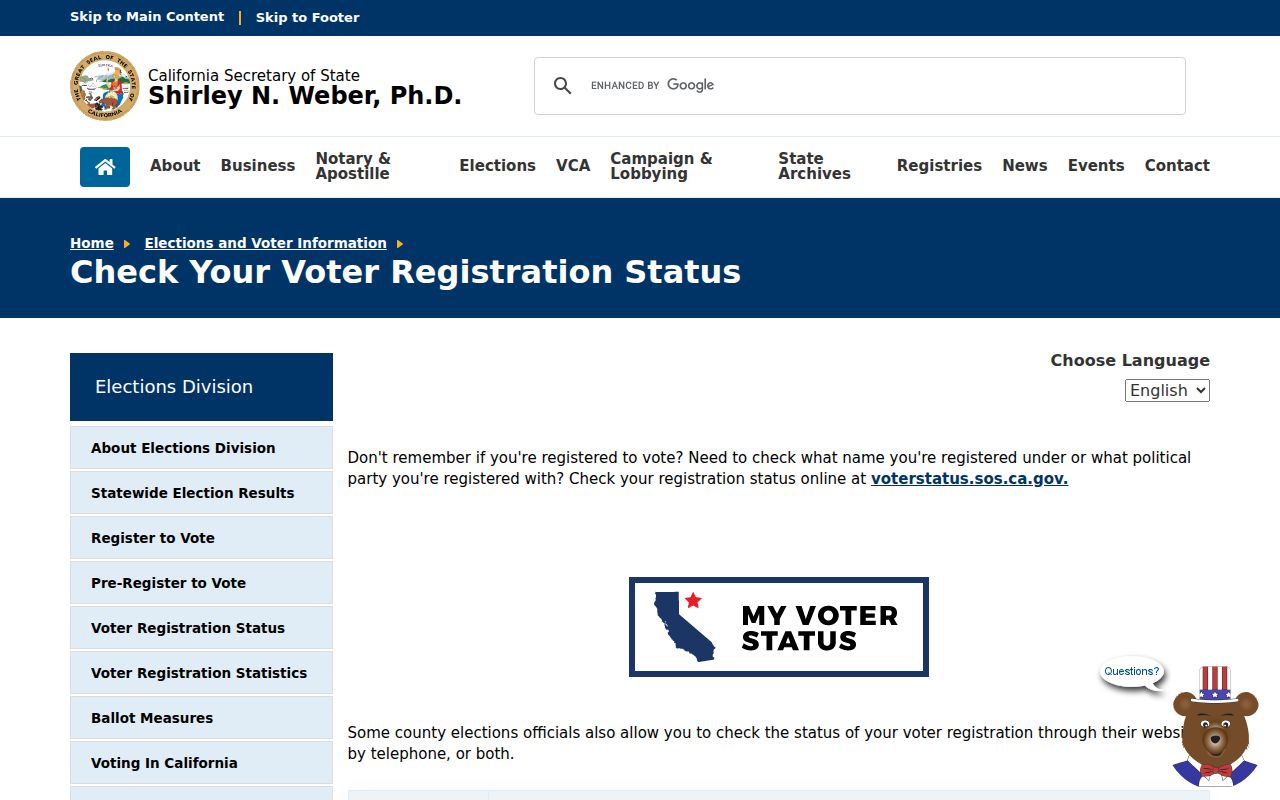
The voter-status image supports a self-check, not an enumeration of El Cajon residents. San Diego Registrar of Voters also accepts controlled data applications at 5600 Overland Avenue in San Diego, with the county’s stated fee options and information lines. Use the application’s purpose, security, and signature rules rather than asking the personal form to do a block search.
Note: A voter-status result confirms a self-authenticated record, not that every person at an address is registered or lives there.
El Cajon Resident Lookup Category Trails
Some identity questions are best answered through category-specific records. The Secretary of State bizfile search can show entity name or number, status, formation, addresses, agent, filing history, and documents. County fictitious business name filings can connect a trade name with a registrant. A registered agent remains a service contact, not proof of residence. The Department of Consumer Affairs search adds license type, number, status, dates, public discipline, and an address when disclosed.
Other state and county tools have narrower uses. The State Controller’s unclaimed-property search takes a name, city, and ZIP and returns a reported owner fragment, holder, and property ID, but a claimant must prove ownership. The Sheriff’s “Who’s in Jail” tool is a current-custody search. Its absence is not historical proof. Each of these trails should be kept separate from a court or vital finding.
- California professional-license search for board and license status.
- bizfile Online for entity and filing history.
- State Controller unclaimed property for a former reported location.
- Sheriff Who’s in Jail for current county custody.
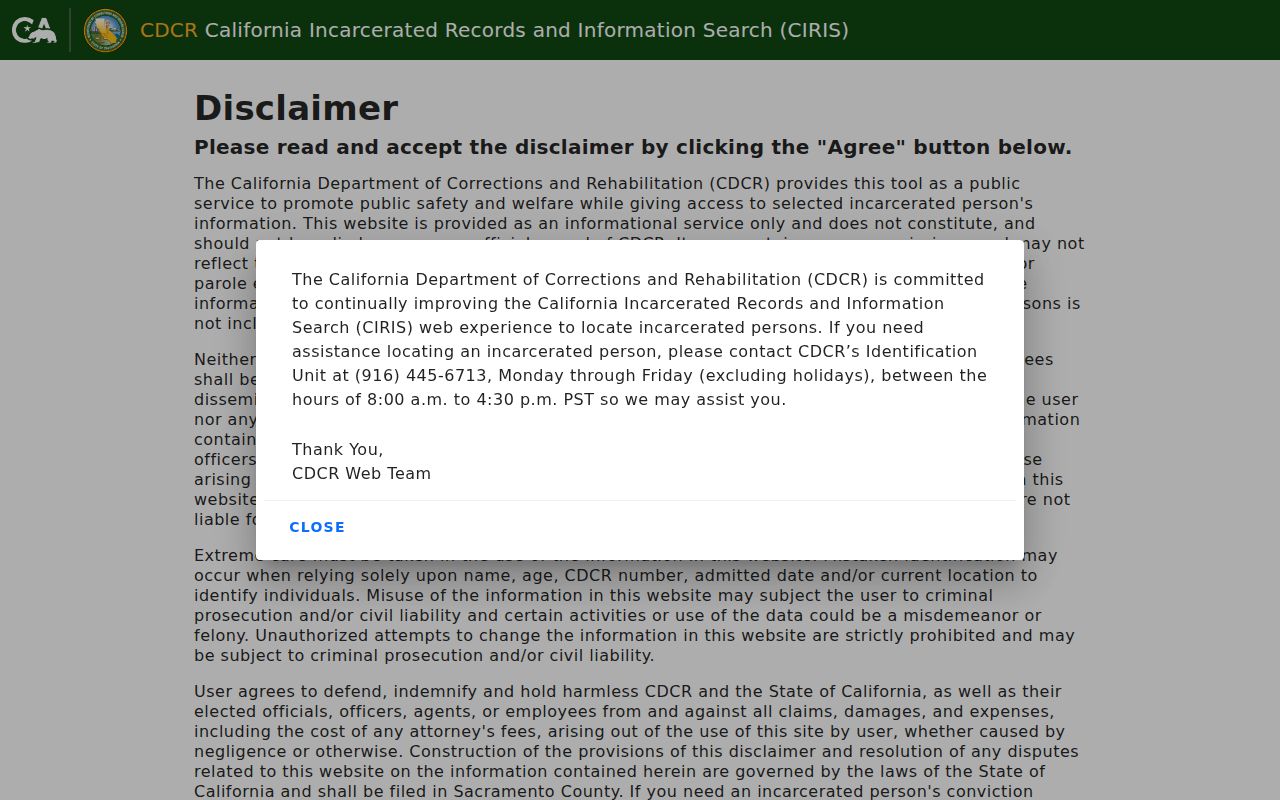
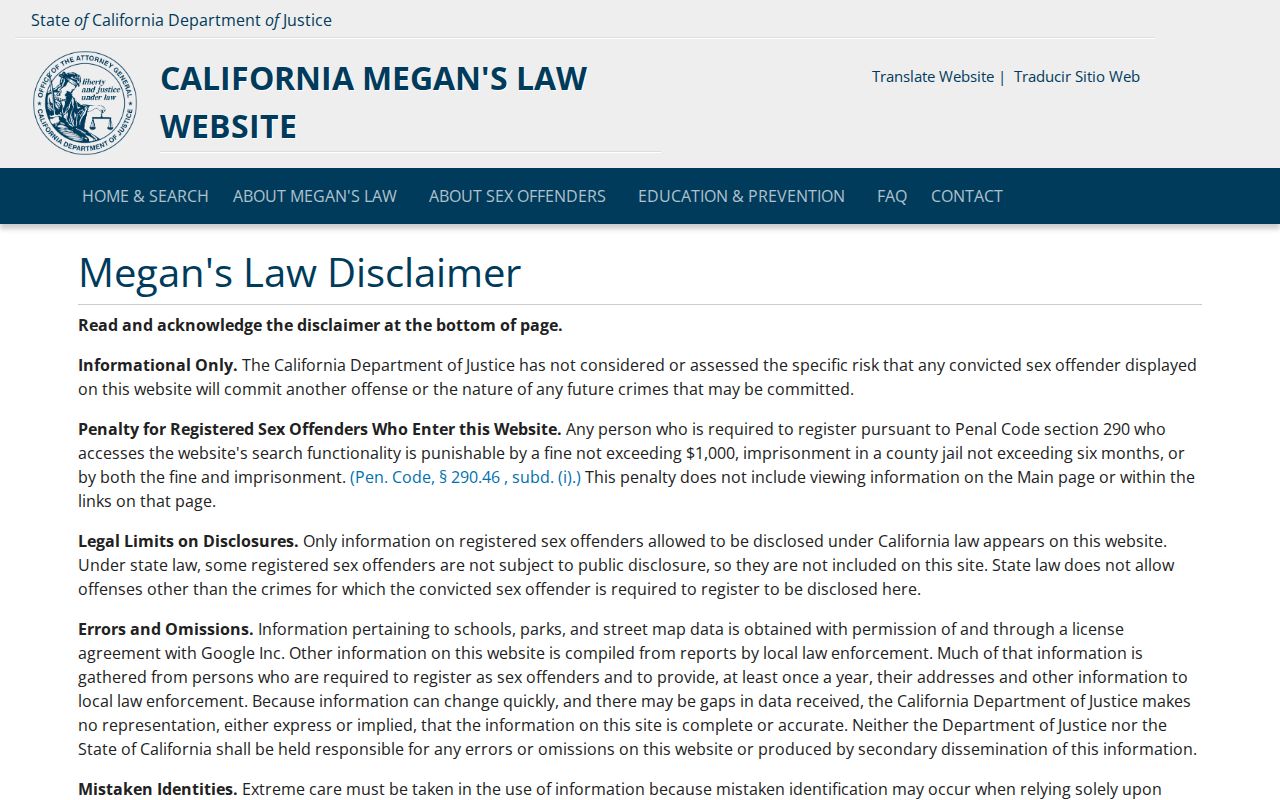
State incarceration records are a distinct route. The CDCR search can use a CDCR number or name and may show institution, age, parole eligibility, and release data where public. California’s Megan’s Law registry provides name, map, or address modes with statutory-use warnings and exclusions. These tools do not replace a court file or prove that a person is a present El Cajon resident.
The CDCR CIRIS search image shows the state custody channel. It is useful for a narrow records question, but it has exclusions and update limits.
The California Megan’s Law search image shows the separate registry path. Read its use warning and treat a registry result as a public record with a defined scope, not as a complete biography.
Category trails work best when the person’s name is paired with a city, entity, license type, age, or dated event. They are leads for verification, not a reason to merge unrelated records.
El Cajon Resident Lookup for Heirs
Personal research calls for different routes. An heir search begins with the decedent’s probate case, then uses the petition, order, estate representative, and heir notices that can be released. Pair those documents with an obituary and a vital record. A former classmate trail can start with school yearbooks, historical newspapers, and library community files. The SDPL California Collection is a regional source for directories, newspapers, and maps, while local branch staff can identify East County yearbooks.
A birth-parent question follows California’s official adoption-information and court process. Adoption files and original birth certificates are sealed unless a statute or court process permits access. Do not use a directory, voter record, or business filing to defeat that seal. The same rule applies to Safe at Home participants and other protected people whose substitute address is a safety control.
The historical collection path is separate from a current one-person El Cajon city directory search. A yearbook or old directory can establish that a person appeared in a place at a time, then a current custodian can confirm only the fact it is legally allowed to release.
Privacy Limits on El Cajon Resident Lookup
California access is shaped by limits as much as by open indexes. Assessor pages suppress owner names online under Government Code section 7928.205, while ARCC can provide ownership and address information by phone or public kiosk. DMV data is protected by federal law. Voter identifiers and signatures are withheld. Vital copy classes distinguish informational from authorized copies. Safe at Home uses a substitute address for survivors and other protected participants.
When a needed record is not posted, use a precise California Public Records Act request to the correct custodian. Government Code sections 7920.000 and following call for an initial determination normally within ten days, with a possible written fourteen-day extension. The law does not require an agency to create a new resident directory or release exempt personal data. A city request should name the department, date span, address or APN, project or permit number, and desired format.
Lawful use. An El Cajon resident lookup is for personal, lawful research, family history, civic understanding, and reconnecting. California stalking, threats, identity theft, and harassment laws apply when personal data is used to watch, intimidate, or harm someone.
Commercial people-finder tools can merge stale or inferred data, but they do not override a custodian’s privacy rule. California’s CCPA and 2026 DROP process provide deletion and opt-out channels for covered data-broker records. The cleanest correction is still to return to the office that holds the source record and ask how its error process works.